
Every year, it seems like Christmas spending starts with gifts and somehow turns into so much more!
There are stocking stuffers, groceries for Christmas dinner, teacher gifts, wrapping paper, and that cute little decoration you weren’t planning to buy.
None of those purchases seem like a big deal on their own.
But together, they can take a pretty big bite out of your budget.

This year, Rich and I are intentionally scaling back on Christmas spending.
And one thing I’ve realized is that it’s not always the big gifts that throw off the budget.
Sometimes it’s all those little purchases we don’t think about ahead of time.
I want to enjoy Christmas without spending January trying to catch up!
A Christmas budget should include everything you expect to spend because of the holiday.
It doesn’t have to be complicated or take the fun out of Christmas. It just helps you decide where your money will go before you start spending it.
Start With What You Can Afford
Before making your shopping list, figure out how much money you can reasonably put toward Christmas.
Not sure how much you should budget for Christmas this year?
My Christmas Budget Calculator can help you figure out how much you can spend and make a plan before you start shopping.
Look at what you already have saved and what you can set aside between now and the holiday after covering your regular bills and needs.
Try not to start with everything you want to buy and then figure out how to pay for it. Start with the money you have available and build your plans around that amount.
Whether you have $300 or $800 to spend, start with what you can actually afford and make your Christmas plans fit that amount.
Your Christmas budget does not have to look like anyone else’s. It needs to work for your household.
You can use my free printable budget planner to look at your regular expenses and see what room you have for holiday spending.
Check What You Already Have
Before buying anything, take a little inventory.
Check the closet where you tuck away gifts throughout the year. Look through your wrapping supplies, decorations, and pantry.
You might already have:
- Gifts you bought on clearance.
- Gift bags and tissue paper you saved.
- Wrapping paper left from last Christmas.
- Decorations you forgot about.
- Baking ingredients you can use.
- Supplies for homemade gifts.
Make a note of what you find and who any gifts could go to.
A gift bought months ago is easy to forget when you are scrolling through holiday deals. Checking first can keep you from buying twice for the same person.
Make a Gift List With Spending Limits
Write down everyone you plan to give a gift to, then assign an amount to each person.
Include the people outside your immediate family, too. Teachers, neighbors, coworkers, hosts, and gift exchanges can all become part of your holiday spending.
You don’t have to spend the same amount on everyone. You can also decide that some people will receive a homemade treat, a thoughtful note, or a small shared gift.
Your list might look something like this:
| Person or group | Planned amount | Gift idea |
|---|---|---|
| Family member | $40 | Something from their wish list |
| Grandchild | $25 | Book and small toy |
| Teacher | $10 | Useful gift or homemade treat |
| Neighbor | $5 | Packaged Christmas cookies |
| Gift exchange | $20 | Gift within the exchange limit |
These amounts are just examples. Choose amounts that fit your total budget.
Once you’ve bought someone’s gift, cross them off your list! You don’t need to keep adding things just because you find another good deal.
Give Stocking Stuffers Their Own Budget
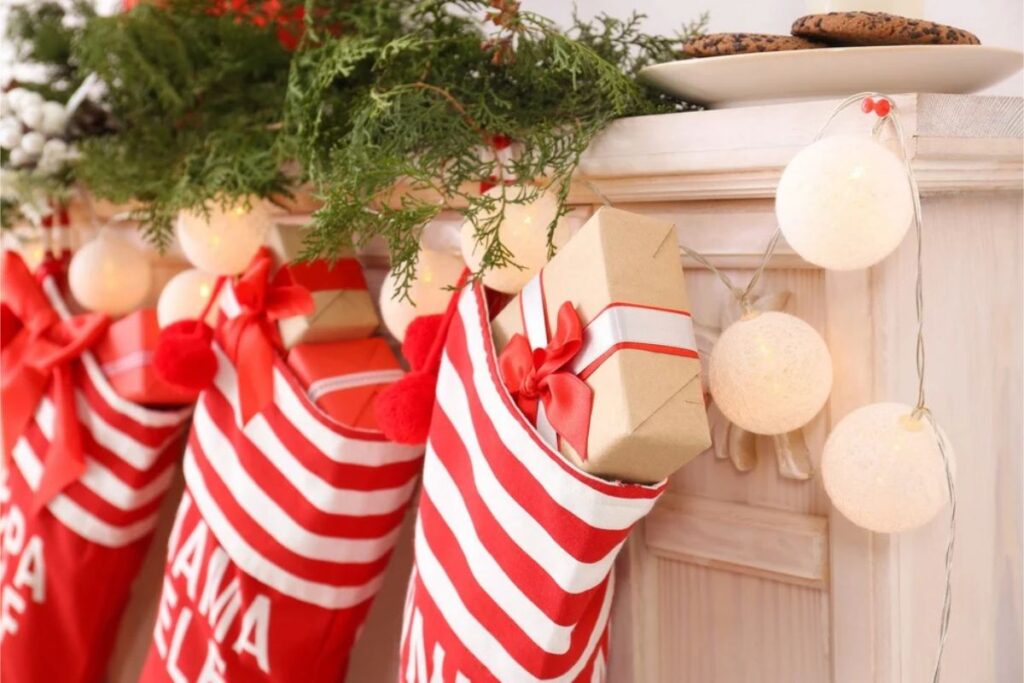
Stocking stuffers are easy to underestimate.
A few dollars for candy, a little toy, some lip balm, and a pair of socks can add up quickly when you are filling several stockings.
Decide how much you want to spend per stocking before shopping. Then multiply that amount by the number you plan to fill.
For example, four stockings at $15 each need a $60 place in your Christmas budget.
You can include useful items you would buy anyway, but count the spending somewhere in your household budget. Moving a purchase into a stocking doesn’t make it free.
Plan for Holiday Food
Christmas food spending can go well beyond one dinner.
Think about what you expect to make or bring throughout the season:
- Christmas dinner and breakfast.
- Cookie exchanges.
- Food for parties or gatherings.
- Homemade food gifts.
- Snacks and drinks for guests.
- A dish you promised to bring somewhere.
Check your pantry before making your grocery list, and look for recipes that use some of the same ingredients.
You can also simplify the menu. A few favorite dishes can make a wonderful meal without needing every side, dessert, and appetizer you can think of.
For your budget, count the extra food spending above what you normally spend on groceries. If your usual grocery money covers part of the meal, you don’t need to count that same money twice.
Include Wrapping, Packaging, and Postage
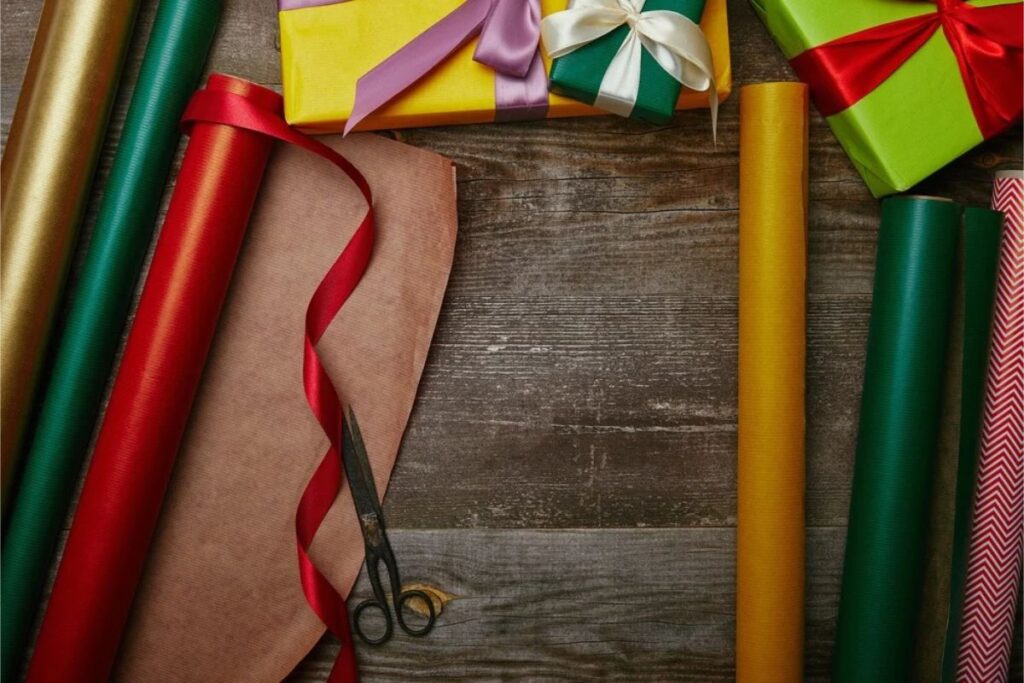
Wrapping supplies are another expense that often gets left off the list.
Think about wrapping paper, tape, gift bags, tissue paper, tags, and any containers you need for homemade gifts.
If you mail gifts or Christmas cards, include postage and shipping costs, too.
Before buying more supplies, use what you have. A saved gift bag or a simple paper bag can still make a gift feel special.
For homemade food gifts, include the packaging when you calculate the cost per gift. The cookies might be inexpensive, but tins, jars, and ribbon can change the total.
Choose the Activities That Matter Most
There are plenty of ways to celebrate Christmas, but you don’t have to pay for all of them.
Talk with your family about the traditions you most want to keep. Then figure out what those plans will cost.
That might include tickets, parking, gas, meals while you are out, or supplies for an activity at home.
A Christmas movie night, looking at neighborhood lights, or baking together can be something to look forward to without requiring a big purchase.
Leave room for the traditions you care about most. It is easier to pass on other activities when you have already decided what matters to your family.

Remember Decorations, Clothing, and Travel
Not every household will spend money in these categories, but they are worth considering before you finish your budget.
Will you buy a Christmas tree? Do you need to replace a broken string of lights? Are you planning to buy matching pajamas or clothes for a gathering?
If you are traveling, think about transportation, lodging, meals, and any other costs you will need to cover.
These expenses can still fit into your plan. The important part is deciding on them ahead of time instead of treating every purchase as an exception.
Leave a Little Room for the Unexpected
Even with a good list, something may come up.
You might remember a gift exchange, get invited to another gathering, or need an ingredient you thought was in the pantry.
If possible, leave a small amount unassigned for those expenses.
That money is part of your total Christmas budget. It gives you some flexibility without increasing the amount you planned to spend.
If your budget doesn’t have room for a cushion, an unexpected expense may mean reducing another category.
Put Your Christmas Budget Together
Think about it. An extra $10 for stocking stuffers, $15 for wrapping supplies, $20 for Christmas baking ingredients, and $25 for a last-minute gift adds up to $70 you might not have planned to spend. And that’s before all the other little things that pop up during December!
Here is an example of how a $500 Christmas budget could be divided:
| Category | Budget |
|---|---|
| Gifts | $250 |
| Stocking stuffers | $40 |
| Extra holiday food | $100 |
| Wrapping, packaging, and postage | $25 |
| Activities | $35 |
| Decorations or clothing | $20 |
| Unexpected expenses | $30 |
| Total | $500 |
This example doesn’t include travel. If travel is part of your Christmas plans, give it a category and adjust the other amounts.
Your numbers may look completely different. You might spend more on food and less on gifts, or use decorations and wrapping supplies you already own.
The goal is to make sure your planned spending fits the money you have available.
Track Your Spending as You Go
Keep a running total as you shop.
A notebook, your phone, or a simple spreadsheet can work. Record the purchase, its full cost, and the category it belongs to.
Include sales tax and shipping when they apply.
If you budget $40 for a gift and buy it for $28, record the $28 you spent. You don’t have to find another $12 worth of gifts to reach the limit.
Coming in under budget is a good thing.
Check your remaining money before shopping again, especially during big sales. A discount can help you buy something on your list for less, but it can also tempt you to spend money you had planned to keep.
What if Your Plans Cost More Than Your Budget?
If the total is too high, adjust the plan before making the purchases.
You could give fewer gifts, choose smaller gifts, simplify a meal, reuse decorations, or replace a paid activity with something you can do at home.
If other people are involved in your plans, have those conversations early. Setting a gift exchange limit or asking everyone to bring a dish can make the season more affordable for several households.
You can give yourself permission to do less.
Christmas can still be meaningful when the gifts are smaller, the food is simpler, and the calendar has a little breathing room.
We’re actually putting this into practice ourselves this Christmas! Rich and I are buying fewer gifts, shopping secondhand when we can, and focusing more on making memories together.
I shared more about our plans in my latest Christmas YouTube video.

Make Your Plan Before the Holiday Spending Begins
You don’t need to have every gift figured out today.
Start by choosing a total you can afford, checking what you already have, and writing down the expenses you expect. Then use that plan as you shop and make decisions throughout the season.
My free printable budget planner can help you see how Christmas spending fits alongside your regular household needs.
I want to enjoy the season and feel good about the choices I made when January arrives. Planning for the little extras is one way to help make that happen.
What Christmas expense tends to sneak up on you each year?


