If you’re looking to learn How to Make Cheese, you’ve come to the right place.
Cheese is one of those foods that can make just about anything taste better.
Whether it’s sharp and tangy like Parmesan or soft and creamy like ricotta, cheese is incredibly versatile and comes in so many delicious varieties.
The best part? You can actually make your own cheese at home.

It might sound intimidating, but once you get the hang of it, it’s a fun and rewarding process.
In this guide, I’ll walk you through the basics of how to make cheese, what supplies you’ll need, and tips to help you get the best results—even if you’re just starting out.
Types of Cheese
There are a ton of different cheeses out there, but here are a few popular ones, along with a quick description of each:
- Cheddar: Hard, sharp, and nutty. Classic yellow or white.
- Parmesan: Hard and salty. Great grated on top of dishes.
- Gouda: Semi-soft with a sweet, buttery flavor.
- Mozzarella: Soft and mild, great for melting.
- Brie: Soft, creamy, and smooth.
- Ricotta: Soft and slightly sweet. Perfect in lasagna or spread on toast.
If you’re just getting started, soft cheeses like mozzarella and ricotta are your best bet. They don’t require rennet (an enzyme used in hard cheese), and they come together pretty quickly.
What You’ll Need
To make cheese at home, you’ll need a few basic ingredients and tools:
Ingredients:
- Milk – Whole milk is best, but you can also use low-fat or skim. The fresher, the better.
- Rennet – An enzyme that helps curdle the milk (needed for most hard cheeses).
- Culture – Bacteria that gives your cheese flavor and texture.
- Salt – Adds flavor and helps preserve the cheese.
Tools:
- Large pot
- Thermometer
- Cheesecloth
- Colander
- Ladle
- A container to store your finished cheese

The Cheese-Making Process (Simple Overview)
Here’s a breakdown of how homemade cheese comes together:
Step 1: Start with Milk
Different types of milk make different cheeses:
- Goat’s milk: Tangy and slightly crumbly
- Cow’s milk: Milder and creamier
- Sheep’s milk: Rich and fatty
- Buffalo milk: Very creamy and slightly sweet (traditionally used for mozzarella)
Heat the milk gently to kill any bacteria, then cool it to about 90°F.
Step 2: Add Culture
Once your milk is at the right temp, add your cheese culture.
This is what gives the cheese its flavor. Let it sit for about 30 minutes.
Step 3: Add Rennet
Next, add your rennet.
This will cause the milk to curdle and form a gel-like consistency.
Let it sit undisturbed for another 30 minutes.
Step 4: Let it Ferment
The curd now needs time to develop.
Let it ferment until the pH reaches around 6.4. (You can use pH strips for this.)
Step 5: Cut the Curd
Use a knife to cut the curd into small cubes.
This helps separate the curds from the whey.
Step 6: Drain the Whey
Place the curds in a colander lined with cheesecloth and let the whey drain.
The longer it drains, the drier the cheese will be.
Step 7: Stretch or Texture (If Needed)
If you’re making mozzarella, this is where you’d heat the curds in hot water and stretch them until they’re smooth and shiny.
For other cheeses, this step might involve pressing or stacking (like in cheddar).
Step 8. Salt It
Soak the curds in a saltwater brine or mix salt directly into the curds.
This adds flavor and helps preserve the cheese.
Step 9: Age the Cheese
Hard cheeses like cheddar and Parmesan need time to develop flavor.
Aging can last anywhere from a few days to several months depending on the type.
Best Beginner Cheeses to Try
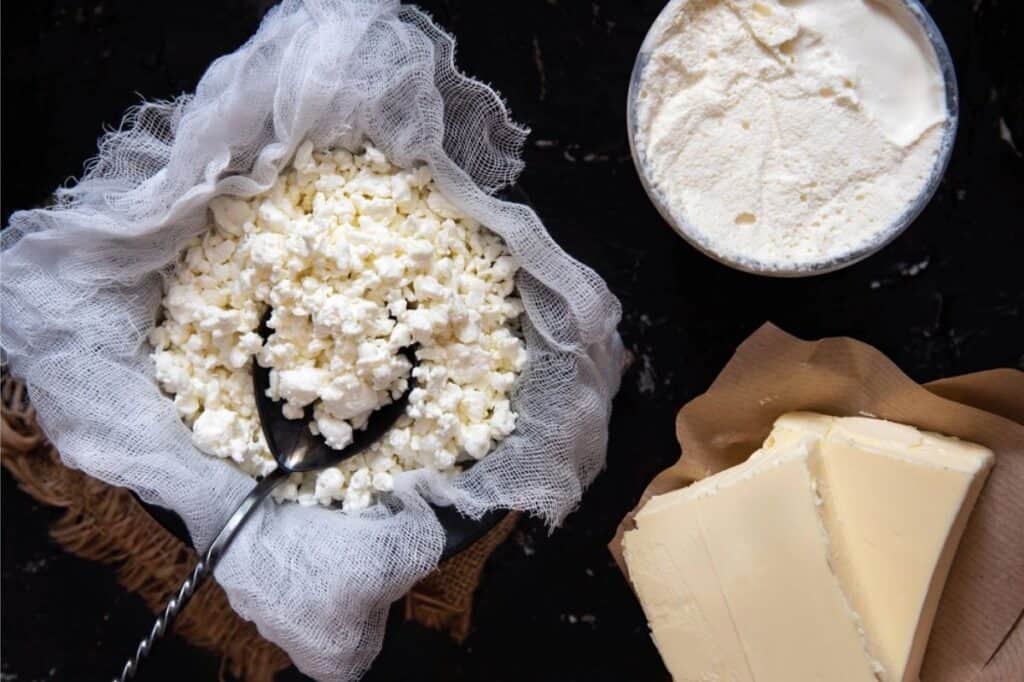
If you’re brand new to cheese-making, here are a few easy ones to start with:
- Ricotta
- Mozzarella
- Cream Cheese
These don’t require a lot of equipment or aging and are super satisfying to make.
A Few Cheese-Making Tips
- Use the freshest milk you can find. Quality really matters here.
- Stick to the instructions. Cheesemaking is part art, part science—but in the beginning, the science wins.
- Be patient. Let each step take its time, especially fermentation and draining.
- Try new things. Once you get the hang of it, you can experiment with different milks, cultures, and even aging times.
- Enjoy the process. It’s surprisingly fun and so satisfying to eat cheese you made yourself.
Learning how to make cheese is one of those kitchen skills that feels old-fashioned in the best way.
It takes some time and a little trial and error, but once you do it a couple of times, you’ll feel confident enough to try just about any variety.
What kind of cheese would you try first? Let me know in the comments!